In today's digital world, children aged zero to eight spend an average of two and a half hours a day on screens, and less than half an hour with books (Mann et al., 2025). Research shows that screen time can negatively affect children's cognitive, emotional, and behavioral development, while also displacing activities, like reading and hands-on play, which offer critical support for children’s development across multiple domains (Al-Jbouri et al., 2026;Dowdall et al., 2020;Lillard et al., 2015;McArthur et al., 2021;Yogman et al., 2018).
Digital Entertainment Can Affect Child Development and Displace More Beneficial Activities
Many digital entertainment platforms are designed to keep children watching or playing. Autoplay, endless feeds, and frequent rewards can make devices increasingly difficult to put down (American Academy of Pediatrics, 2026). These features are particularly concerning for children still learning to manage their attention and emotions. Research has shown that children who spend more time on screens have more difficulties with attention and executive functioning over time, and the frequent use of devices to calm young children has been associated with increased emotional reactivity (Reid et al., 2026;Radesky et al., 2023). A 2026 meta-analysis of more than 2.8 million children reinforces these behavioral and emotional concerns, while also linking screen exposure to weaker language development and academic achievement (Al-Jbouri et al., 2026).
Beyond its direct effects on attention and self-regulation, screen time can also displace experiences that help children develop language, social skills, and knowledge. For example, conversation, shared reading, and hands-on play provide meaningful opportunities for interaction, exploration, and problem-solving (Yogman et al., 2018;Dowdall et al., 2020). The competition between screens and other activities may also compound over time, as more screen use has been associated with less time spent reading down the line (McArthur et al., 2021).
Reading and Play Offer Developmental Benefits but Often Struggle to Compete with Screens

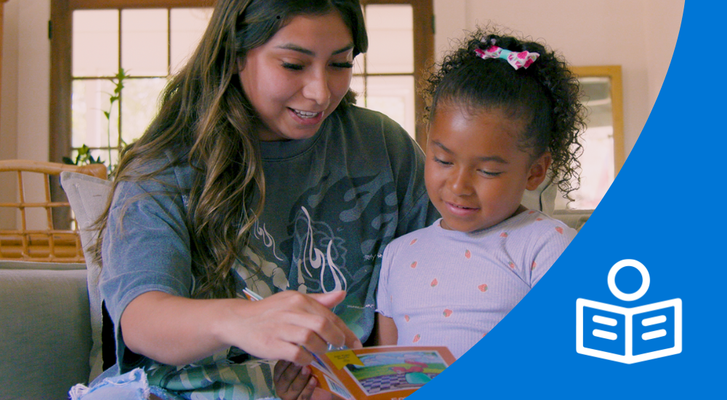
The developmental benefits of shared reading extend well beyond learning to recognize words. Research shows that shared reading improves young children's receptive and expressive language, while extending benefits to the psychosocial well-being of both children and parents (Dowdall et al., 2020;Xie et al., 2018). Print books can be especially conducive to developmentally meaningful interactions, as parents and toddlers have been found to engage in more conversation and collaboration when reading in print rather than on devices (Munzer et al., 2019).
Play offers complementary benefits, supporting children's development through exploration, imagination, and social interaction (Yogman et al., 2018). As children invent scenarios, solve problems, and negotiate with others, they practice skills involved in planning, cooperation, and emotional regulation (Yogman et al., 2018). The American Academy of Pediatrics identifies play as an important contributor to cognitive, social, emotional, and physical development (Yogman et al., 2018). Together, reading and play provide opportunities for children to participate actively in their own learning while developing relationships and skills that extend into everyday life (Dowdall et al., 2020;Yogman et al., 2018).

Despite these benefits, reading and play can struggle to compete with the digital entertainment that often captures children's attention, especially when reading feels difficult or overwhelming (American Academy of Pediatrics, 2026;Toste et al., 2020). Parents can help tip that balance by encouraging children to read and play, making time to share stories and enjoy games together (Xia et al., 2019;Xie et al., 2018;Yogman et al., 2018). Play offers its own rewards through exploration, creativity, problem-solving, and shared enjoyment, making it a natural way to engage children in meaningful activities away from screens (Yogman et al., 2018). Reading, particularly for children still developing foundational skills, may require more deliberate support. Appealing books that build on familiar skills while introducing manageable new challenges can create opportunities for success and progress, helping children develop the confidence and motivation to keep reading (Toste et al., 2020;Yogman et al., 2018).
Just Right Reader Helps Families Engage Children in Skill-Building Offscreen Reading and Play
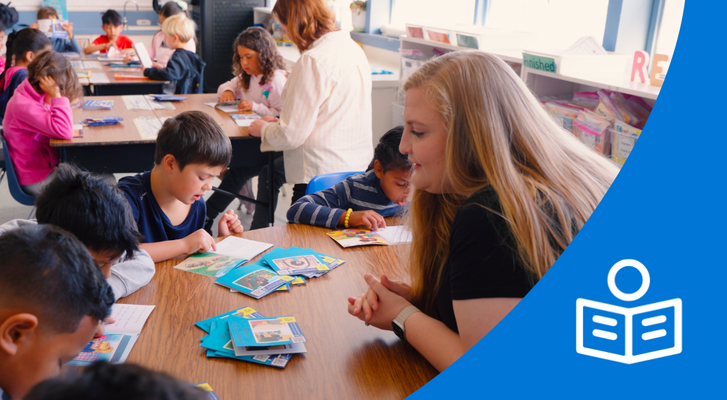
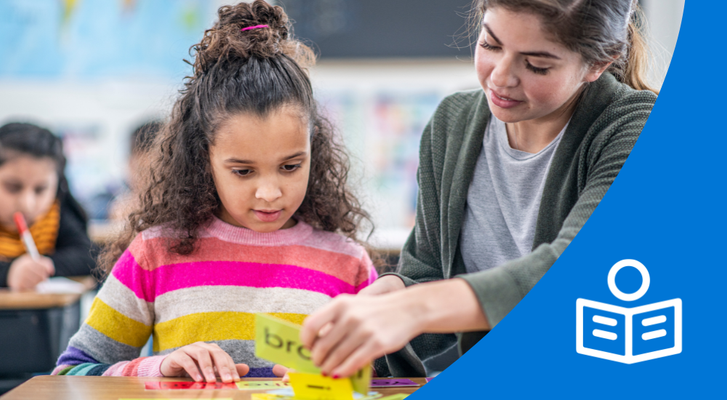
Just Right Reader brings together engaging print books and hands-on games to offer children rewarding alternatives to screens, combining opportunities for enjoyment, exploration, and social interaction with activities that support developing literacy skills (Just Right Reader, n.d.-b;Just Right Reader, n.d.-c). Its books span developmental stages, from early stories that encourage conversation and caregiver connection to sequenced decodable texts and high-interest books that help developing readers strengthen their skills through engaging content (Just Right Reader, n.d.-b;Just Right Reader, n.d.-d). Companion Science of Reading Games create opportunities for shared play, problem-solving, and social interaction while reinforcing targeted phonics skills through games and skill-building activities (Just Right Reader, n.d.-c;Just Right Reader, 2026;Yogman et al., 2018). When delivered through Take-Everywhere Literacy Packs™, books are personalized using student assessment data to provide practice at just the right level, helping children build confidence as they build new skills (Just Right Reader, n.d.-a;Connor et al., 2013).

Efficacy studies have shown that these resources help make reading an increasingly enjoyable and rewarding experience for children. In a kindergarten study of Take-Everywhere Literacy Packs™, the share of parents reporting children’s interest and enjoyment of reading increased from 50% to 90%, while the share reporting confidence and independence rose from 40% to 85% (Jimenez et al., 2025b). Educators in a first-grade evaluation of Just Right Reader’s Classroom Libraries reported greater motivation among students to select books independently (Jimenez et al., 2025a). These improvements in engagement accompanied accelerated achievement gains. In one study, students with Take-Everywhere Literacy Packs™ gained about 3 extra weeks of literacy growth in just one semester compared with peers using other books (Jimenez et al., 2025b).

By making books and games accessible, engaging, and responsive to children's developing abilities, Just Right Reader offers families meaningful alternatives to digital entertainment that foster enjoyment, connection, and active learning while helping children develop the skills and confidence to keep choosing reading and play.

References
Al-Jbouri, E., Nivison, M. D., Neville, R. D., Marsh, A., McArthur, B. A., Christakis, D. A., Fearon, P., & Madigan, S. (2026). Screen use and child and adolescent development and mental health outcomes: A quantitative umbrella review.JAMA Pediatrics.https://doi.org/10.1001/jamapediatrics.2026.4339
American Academy of Pediatrics. (2026). Digital ecosystems, children, and adolescents: Policy statement.Pediatrics, 157(2), e2025075320.https://doi.org/10.1542/peds.2025-075320
Connor, C. M., Morrison, F. J., Fishman, B., Crowe, E. C., Al Otaiba, S., & Schatschneider, C. (2013). A longitudinal cluster-randomized controlled study on the accumulating effects of individualized literacy instruction on students' reading from first through third grade.Psychological Science, 24(8), 1408–1419.https://doi.org/10.1177/0956797612472204
Dowdall, N., Melendez-Torres, G. J., Murray, L., Gardner, F., Hartford, L., & Cooper, P. J. (2020). Shared picture book reading interventions for child language development: A systematic review and meta-analysis.Child Development, 91(2), e383–e399.https://doi.org/10.1111/cdev.13225
Jimenez, S., Ilievski, I., Mason, M. L., & Schechter, R. L. (2025a).Just Right Reader 1st grade Classroom Libraries cohort efficacy study. LXD Research.https://eric.ed.gov/?id=ED677149
Jimenez, S., Ilievski, I., Mason, M. L., & Schechter, R. L. (2025b).Just Right Reader Take-Everywhere Literacy Packs efficacy study: Examining the impact on kindergarten students from MOY to EOY 2025. LXD Research.https://eric.ed.gov/?id=ED677147
Just Right Reader. (n.d.-a).Beyond book delivery: How Take-Everywhere Literacy Packs™ accelerate reading achievement.https://justrightreader.com/blogs/news/beyond-book-delivery
Just Right Reader. (n.d.-b).Early literacy.https://justrightreader.com/pages/early-literacy
Just Right Reader. (n.d.-c).Science of Reading Games.https://justrightreader.com/pages/take-everywhere-games
Just Right Reader. (n.d.-d).Take-Everywhere Literacy Packs™.https://justrightreader.com/pages/take-everywhere-packs
Just Right Reader. (2026, October 8). Just Right Reader launches 'Science of Reading Take-Everywhere Games' to engage students in fun, hands-on literacy practice [Press release].PR Newswire.https://www.prnewswire.com/news-releases/just-right-reader-launches-science-of-reading-take-everywhere-games-to-engage-students-in-fun-hands-on-literacy-practice-302902761.html
Lillard, A. S., Drell, M. B., Richey, E. M., Boguszewski, K., & Smith, E. D. (2015). Further examination of the immediate impact of television on children's executive function.Developmental Psychology, 51(6), 792–805.https://doi.org/10.1037/a0039097
Mann, S., Calvin, A., Lenhart, A., & Robb, M. B. (2025).The Common Sense census: Media use by kids zero to eight, 2025. Common Sense Media.https://www.commonsensemedia.org/research/the-2025-common-sense-census-media-use-by-kids-zero-to-eight
McArthur, B. A., Browne, D., McDonald, S., Tough, S., & Madigan, S. (2021). Longitudinal associations between screen use and reading in preschool-aged children.Pediatrics, 147(6), e2020011429.https://doi.org/10.1542/peds.2020-011429
Munzer, T. G., Miller, A. L., Weeks, H. M., Kaciroti, N., & Radesky, J. (2019). Differences in parent-toddler interactions with electronic versus print books.Pediatrics, 143(4), e20182012.https://doi.org/10.1542/peds.2018-2012
Radesky, J. S., Kaciroti, N., Weeks, H. M., Schaller, A., & Miller, A. L. (2023). Longitudinal associations between use of mobile devices for calming and emotional reactivity and executive functioning in children aged 3 to 5 years.JAMA Pediatrics, 177(1), 62–70.https://doi.org/10.1001/jamapediatrics.2022.4793
Reid, C. A., Dhamankar, M., Marsh, S., Peterson, E. R., Erb, C. D., & Waldie, K. E. (2026). Have we found directionality? Longitudinal associations between screen use and executive function in children: A scoping review.Developmental Review, 80, Article 101266.https://doi.org/10.1016/j.dr.2026.101266
Toste, J. R., Didion, L., Peng, P., Filderman, M. J., & McClelland, A. M. (2020). A meta-analytic review of the relations between motivation and reading achievement for K–12 students.Review of Educational Research, 90(3), 420–456.https://doi.org/10.3102/0034654320919352
Xia, T., Gu, H., & Li, W. (2019). Effect of parents' encouragement on reading motivation: The mediating effect of reading self-concept and the moderating effect of gender.Frontiers in Psychology, 10, Article 609.https://doi.org/10.3389/fpsyg.2019.00609
Xie, Q.-W., Chan, C. H. Y., Ji, Q., & Chan, C. L. W. (2018). Psychosocial effects of parent-child book reading interventions: A meta-analysis.Pediatrics, 141(4), e20172675.https://doi.org/10.1542/peds.2017-2675
Yogman, M., Garner, A., Hutchinson, J., Hirsh-Pasek, K., & Golinkoff, R. M. (2018). The power of play: A pediatric role in enhancing development in young children.Pediatrics, 142(3), e20182058.https://doi.org/10.1542/peds.2018-2058