
Editor's Note: This article is adapted from our live webinar, "Bright Brains, Summer Gains" featuring Dr. John Hutton, associate professor of pediatrics at UT Southwestern Medical Center.
💡 Want to watch the full discussion? Access the on-demand webinar recording here.
A baby is born with brain circuits for vision, language, memory, and attention. There is no circuit for reading. That network has to be built, and much of the building happens long before a child walks into kindergarten.
Dr. John Hutton, a pediatrician and brain researcher, has spent his career using MRI to watch that construction happen in preschool-aged children. His findings lead to a hopeful, practical conclusion.
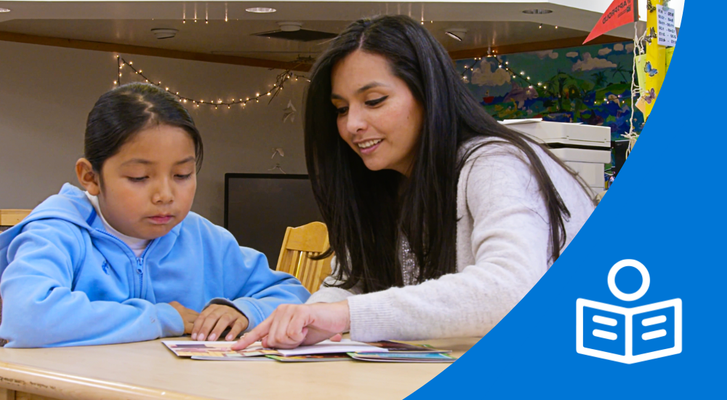
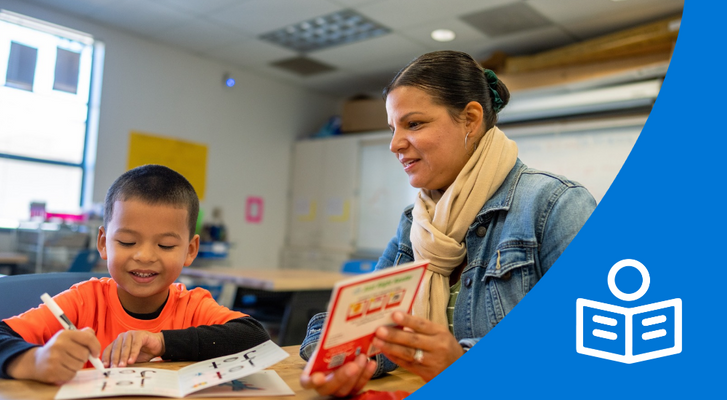
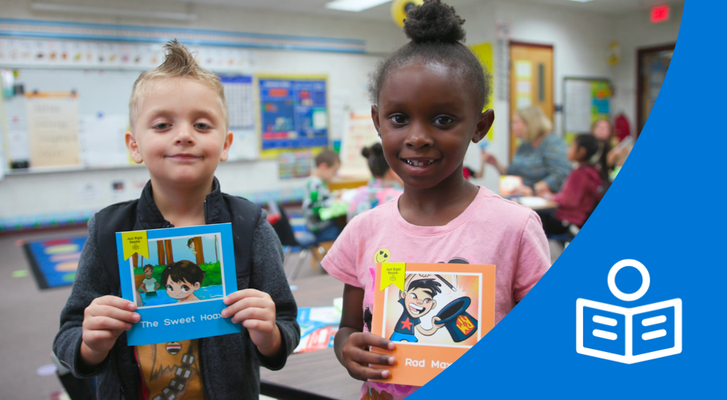
Everyday reading with a caring adult measurably shapes the young brain. And summer, when routines loosen and screens creep in, is one of the best times for families to keep that work going.
- The brain grows fastest from birth to age five, reaching roughly full size by about age five, which makes early reading routines especially powerful.
- Reading one story a day can expose a child to an estimated 1.4 million additional words by age four, and the story can take as little as five minutes.
- Preschoolers with more books and reading at home show stronger activation in brain areas for imagination and better-developed white matter connecting language areas, according to Dr. Hutton's MRI research.
- Interactive, conversational reading strengthens the brain areas that control speech and social-emotional understanding, not just listening.
- Illustrated picture books hit a "Goldilocks" sweet spot for preschoolers: audio-only stories engaged brain networks too little, and animated stories engaged vision so heavily that connections to language and imagination dropped by about 50%.
- Screen time's biggest risk to reading is displacement, meaning it crowds out the time children would otherwise spend reading, talking, and playing with caregivers.
Why do the first five years matter so much for reading?

The first five years matter because they are the most rapid stage of brain development a person will ever experience. As Dr. Hutton explained, babies are born with more neurons than they will ever have again, and the brain reaches roughly full size by about age five.
From there, development is a process of reinforcing the connections a child uses, such as reading together, and pruning the ones used less. The brain wants to be efficient, so whatever a child practices early is what it keeps and strengthens.
Dr. Hutton described "sensitive periods" when the brain is especially plastic. Basic abilities like vision, hearing, and emotional control peak around age one. Language, symbols, and social skills also peak early but have long tails, so they can be learned for life, just more easily when children are young.
That is why he argued for investing in early childhood. The brain's capacity to change is far higher in young children, yet much more money tends to go toward remediation later on.
In Cincinnati neighborhoods with more libraries, more school funding, and more resources, about 77% of children arrived at kindergarten ready to learn. In neighborhoods with fewer of those resources, about 7% did.
Dr. Hutton noted that readiness directly predicts later reading ability. Nationally, only about 31% of children tested proficient in reading by third and fourth grade in 2024, down from about 33% in 2022.
What is emergent literacy?
Emergent literacy is the idea that reading develops from infancy, not suddenly in kindergarten. Dr. Hutton admitted he once pictured reading the way many people do: children can't do it, then they start school and learn.
In reality, early skills stack on top of one another for years. Emergent literacy draws on three components: skills, knowledge, and attitudes, and attitudes are the one most often forgotten.
Does a child see reading as stressful, boring, or merely required for school? Or is it something fun, shared with someone who loves them, that they want to keep doing? That attitude shapes everything that follows.
How early skills stack up
Dr. Hutton walked through a literacy growth curve his team developed, mapped against a child's pediatric checkups. Oral language comes first: babies coo their vowel sounds, then babble their consonants, and caregivers echo those sounds back in what he called "a process of sculpture."
Print concepts follow, as babies chew and pat books and gradually learn that books open, have pages, and hold stories. Writing, comprehension, alphabet knowledge, letter-sound knowledge, and eventually fluency come later.

Phonological skills, the ability to hear the sounds in words and pull them apart, work more like a light bulb turning on. They typically emerge around two and a half to three years old and should be in place by about age seven. If they are not, Dr. Hutton said, that is the time to worry and refer a child for testing.
How is the brain wired to read?
The brain learns to read by teaching existing networks to work together. Asked where the reading network lives, Dr. Hutton gave a trick answer: "It's in the future."
Reading is a relatively new human invention, so the brain has not evolved a hardwired network for it. Through exposure and practice, visual, language, and attention areas learn to connect, forming what researchers call an emergent or functional network.
For that to work, each component network has to be well developed and then integrated. Dr. Hutton framed many reading difficulties through this lens. Children growing up in poverty may have less-developed oral language networks because of fewer words heard at home. Children with dyslexia often show differences in how the temporal and parietal lobes integrate. Children with ADHD may have deficits in attention and working memory that make integration harder.
The rule of Ls
Dr. Hutton shared a memorable shorthand: language and literacy live on the left. The reading network sits mostly in the brain's left hemisphere, including phonological areas, semantic areas for understanding words and concepts, visual areas, and an attention "spotlight" on top.
One remarkable piece is the visual word form area, which learns to recognize familiar words almost instantly. New readers sound out words slowly through phonological pathways, then shift to this fast visual pathway as words become familiar. Skilled adult readers mostly read by sight, but they keep the ability to sound out new words for life.
These areas are linked by white matter, the brain's wiring. An arc-shaped tract called the arcuate fasciculus connects the areas for understanding words with the areas for saying them. That is why children hear words before they can say them, and why, as Dr. Hutton put it, "it's so important to get kids talking."
"More than anything, I view a book as a catalyst: something that brings grownups and children together to share an experience that's nurturing."
Dr. John Hutton, UT Southwestern Medical CenterWhat does MRI research show about reading at home?
MRI research shows that both how much children are read to and how they are read to leave visible marks on the developing brain. Dr. Hutton noted that his former research group in Cincinnati was among the first, starting around 2014, to publish studies linking preschoolers' home literacy environments to brain structure and function.
Preschoolers in these studies played games like "the statue game" or "the rocket ship game" to stay still in the scanner. Then researchers measured their brains while they listened to stories read aloud.
More reading: stronger imagination
Children with more books and more reading at home showed stronger activation in a left-hemisphere area involved in imagining and visualizing stories. There were no pictures in the scanner, so this was a snapshot of children picturing the story in their heads. The children with more reading exposure were better at imagining, and they also recalled the stories better.
More interactive reading: stronger talking and feeling
In another study, researchers video-recorded four-year-olds reading the same book with a caregiver and scored how interactive each session was. Children who experienced more interactive reading showed greater activation in brain areas involved in speech and in social-emotional processing, and they had stronger expressive language skills.
Dr. Hutton called interactivity "the most powerful aspect of reading aloud." Rollicking animal sounds, questions, and conversation give children practice using the very brain areas that control talking.
More reading: better wiring
A third study looked at white matter. Children with richer home literacy environments had more mature white matter in tracts connecting language areas, along with higher language and literacy skills. In short, reading builds the brain's connections.
Dr. Hutton also shared an encouraging note about dyslexia. Children with dyslexia often show different activation patterns when reading, but after evidence-based treatment, those patterns can normalize. Therapy can change how the brain functions.
How does screen time affect a young child's brain?
Screen time affects young children's brains mainly by displacing the reading, talking, and play they would otherwise do with caregivers. Dr. Hutton explained that screens can also do harm directly through inappropriate or overstimulating content, but "there's only so many hours in the day."
He pointed out that the main reason families give for screen time is that it is educational. Yet no standard requires apps or programs to prove they teach anything; Sesame Workshop, which researches its programs, is a notable exception.
Young children also learn differently from screens. Dr. Hutton described the "video deficit": babies' brains evolved to learn from people, and in research on learning a new language, learning through a screen was almost completely ineffective compared with learning from another person.
His MRI studies found that preschoolers with more screen time, measured by frequency, content, screens in the bedroom, and whether caregivers watched with them, had less-developed white matter across the brain, along with lower language and literacy skills. These results held after accounting for age, sex, and socioeconomic level. The same children had thinner cortex in areas involved in vision and in understanding other people's feelings.
Dr. Hutton was careful to frame this as a warning, not a panic. Screens are not "like radiation." The concern is what children miss when screens take the place of real-world experiences.
Are picture books better than animated stories?
For preschoolers, illustrated picture books engaged the brain more efficiently than either audio-only or animated stories in Dr. Hutton's research. His team showed children the same stories in three formats and measured how brain networks communicated.
During animation, children's brains locked onto the fast-moving visuals. Compared with the illustrated version, connections between attention and language networks dropped by about 50%, and connections between attention and imagination also dropped by about 50%. The animation was doing the imagining for them.
The audio-only format had the opposite problem: networks were not talking to each other as efficiently. Dr. Hutton's team called this the Goldilocks effect: audio was too cold, animation too hot, and the illustrated picture book just right.
Animated story
The video shows everything, so the child mostly tracks the visuals. Attention shifts away from language, and connections between attention and imagination drop by about 50% compared with an illustrated book.
Illustrated picture book
The picture gives the child a foothold, the adult supplies the words, and the child's imagination brings the story to life. Attention, language, and imagination networks work together, and there is room to ask and answer questions.
How can families read interactively with young children?

Families can read interactively by following the child's lead, asking questions, and responding to what the child says or does. The American Academy of Pediatrics recommends reading with children as soon as possible after birth, and a recent AAP guideline encourages pediatricians to work with teachers and other groups to help families support reading.
Reading with babies
With babies, Dr. Hutton stressed setting realistic expectations. A baby may cry, chew the book, or drop it on the floor, and a new caregiver may conclude, "I'm not a good reader," and give up.
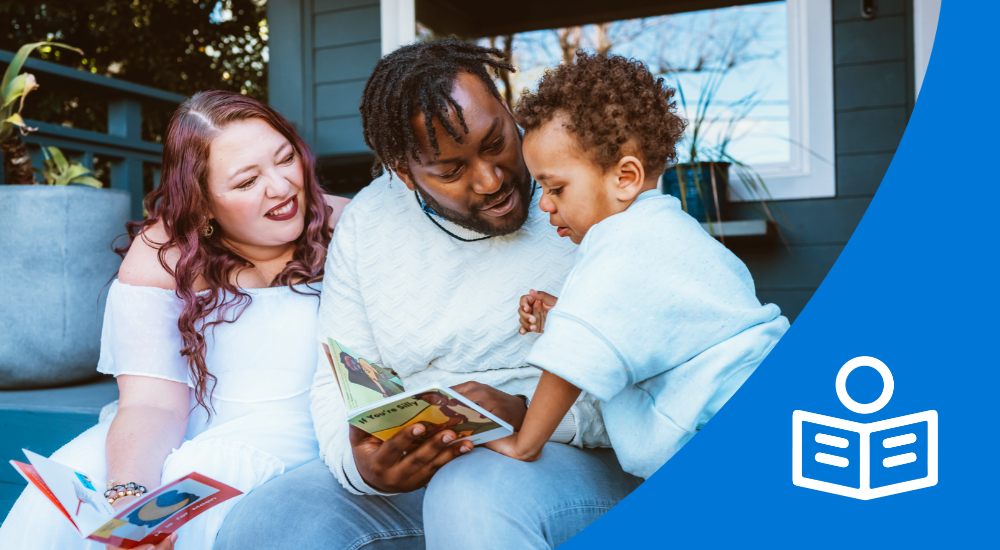
His team developed an acronym to reframe what reading looks like in the first year: it is mostly about snuggling, getting the baby involved, responding to what they do, and keeping it fun. They also created a companion book, available in Spanish, to reinforce those ideas.
Dialogic reading with older children
For older children, Dr. Hutton recommended dialogic reading, an evidence-based approach developed in the 1990s that gets children talking during the story. It also answers the questions many families quietly wonder about. Is it rude for a child to interrupt with questions? Can you just talk about the pictures? Do you have to read every word? Can you go off topic?
Yes, you can talk about the pictures, skip words, and wander off topic. Dialogic reading uses two acronyms: CROWD describes the types of questions to ask, and PEER describes a back-and-forth sequence.
Dr. Hutton's example of PEER went like this. You prompt: "What do you see there?" The child says, "It's a dog." You evaluate: "You're right, that's a dog." You expand: "What kind of dog?" And when the child answers, "A yellow dog," you repeat it back: "You showed me a yellow dog."
How can families prevent the summer slide?
Families can prevent the summer slide by keeping books in children's hands and reading together every day. As Dr. Hutton noted, children often finish the school year reading well and excited, then summer brings distractions and more screen time.
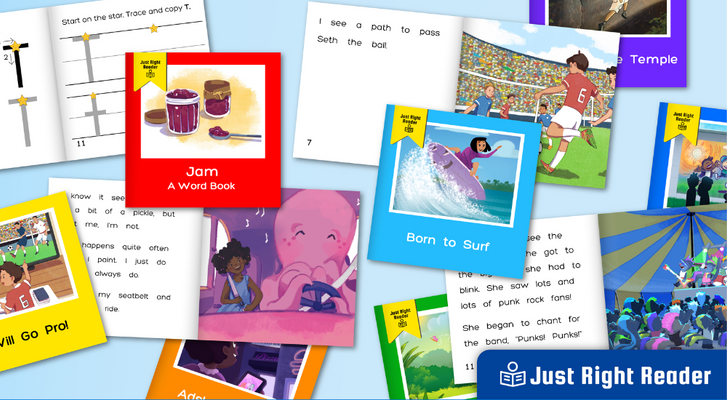
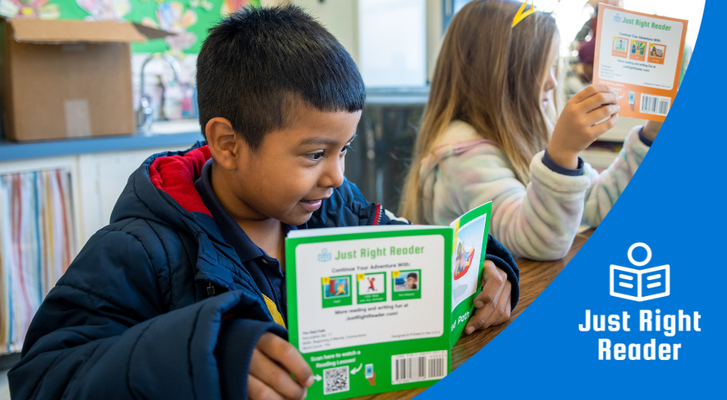
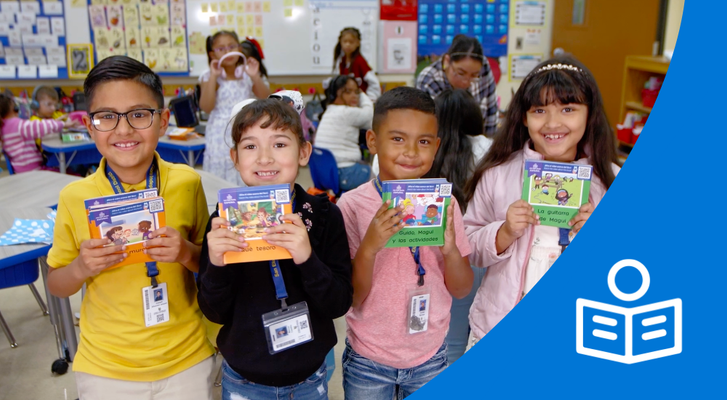
He pointed to take-home book packs like our Take-Everywhere Literacy Packs™ as helpful because they put books children want to read directly into the home, matched to the child. Here is a summer plan drawn from the strategies he shared.
Read one story every day
A single daily story can add an estimated 1.4 million words to what a child hears by age four. It does not need to be long; five minutes counts, and the conversation it sparks multiplies the words a child hears and says.
What you need: one book and five minutes, at a time that fits your family's summer routine.Turn reading into a conversation
Use the PEER sequence: prompt, evaluate, expand, and repeat. Let your child point, ask questions, and tell you about the pictures. That practice strengthens the brain areas that control talking.
What you need: curiosity and patience. There is no need to read every word.Choose illustrated picture books for young children
For preschoolers, illustrated books hit the Goldilocks sweet spot, giving just enough visual support while leaving room for imagination. Save animated stories for occasional use rather than a replacement for books.
What you need: picture books your child is interested in, from home, school, or the library.Protect reading time from screens
Since displacement is screen time's main risk, set aside time that screens cannot crowd out. Dr. Hutton's screen time measure looked at screens in the bedroom, how often they are used, content, and whether adults watch with children, all good places to start.
What you need: a screen-free window each day, such as before bed.Keep books in hand all summer
Children read more when books they like are within reach. Matching books to a child's interests and level helps reading feel like something they want to do, which feeds the attitude side of emergent literacy.
What you need: a small, growing home library that your child helps choose.What does this look like in a community?
In Cincinnati, Dr. Hutton's team ran a program called Dialogic Doctors that spread interactive reading neighbor to neighbor. The team held training sessions at libraries in a couple of communities, coaching parents, aunts, and grandmothers in dialogic reading.
Participants went home with books and taught friends and neighbors the approach in their apartment complexes and at the swimming pool. They reported back on how it was going, and at the end they received a diploma certifying them as Dialogic Doctors, which they were very excited about.
The program showed that interactive reading spreads best through trusted people in a community, not just through books handed out. Dr. Hutton said he would love to get something similar going in Texas, and educators in the session were already listening: the director of an after-school program in Fort Worth shared plans to explore parent engagement training.
"Neurons that fire together, wire together. Whatever kids practice is going to reinforce their brain, and we want it to be as healthy as possible."
Dr. John HuttonThat is the heart of what we believe at Just Right Reader: when families, teachers, and children read together at school, home, and everywhere, young brains get the practice they need to grow into confident readers.
Frequently asked questions
How much should I read to my child each day?
Reading one story a day makes a meaningful difference, according to research Dr. John Hutton shared. One daily story can expose a child to an estimated 1.4 million additional words by age four. The story can be short, even five minutes, especially if it sparks conversation.
When should families start reading to a baby?
The American Academy of Pediatrics recommends reading with children as soon as possible after birth. In the first year, reading is mostly about snuggling, connection, and responding to the baby, not about skills. It is normal for babies to chew on or drop books.
What is dialogic reading?
Dialogic reading is an evidence-based approach, developed in the 1990s, that gets children talking during a story. It uses the PEER sequence (prompt, evaluate, expand, repeat) and the CROWD acronym for types of questions. MRI research shows interactive reading strengthens brain areas for speech and social-emotional understanding.
Is screen time bad for young children's reading development?
Screen time's main risk to reading is that it displaces reading, talking, and play with caregivers. In MRI studies of preschoolers, more screen time was linked to less-developed white matter and lower language and literacy skills. Dr. Hutton frames this as a reason for caution and real-world experiences, not panic.
Are picture books better than animated stories for preschoolers?
For preschoolers, illustrated picture books engaged brain networks most efficiently in Dr. Hutton's research, a finding called the Goldilocks effect. Audio-only stories were "too cold," and animated stories were "too hot," cutting connections between attention and imagination by about 50%. Picture books let a child's imagination do some of the work.
What is emergent literacy?
Emergent literacy is the idea that reading develops gradually from infancy rather than starting in kindergarten. It includes skills like oral language and phonological awareness, knowledge like vocabulary and life experiences, and attitudes toward reading. Attitudes, whether reading feels fun or stressful, are often overlooked.
How can families prevent the summer slide?
Families can prevent the summer slide by keeping books in children's hands and reading together every day. Choosing books that match a child's interests, reading interactively, and protecting reading time from screens all help. Take-home book packs are one way to keep appealing books in the home all summer.
Can treatment change the brain of a child with dyslexia?
Yes. Children with dyslexia often show different brain activation patterns when reading, but Dr. Hutton explained that after evidence-based dyslexia treatment, those patterns can normalize. Dyslexia is highly heritable, so a child with a dyslexic parent or sibling has a higher risk and may benefit from early attention.

Dr. John Hutton
Associate Professor, Division of General and Community Pediatrics, UT Southwestern Medical CenterDr. John Hutton is an attending physician at Children's Medical Center Dallas and an adjunct associate professor of general and community pediatrics at Cincinnati Children's Hospital Medical Center. His research uses MRI to study how reading, screen time, and the home literacy environment shape brain development in preschool-aged children. Before returning to pediatrics, he ran an independent children's bookstore for about 20 years, an experience that sparked his commitment to closing gaps in access to books and reading.
Watch the full webinar
See Dr. Hutton's MRI images, the literacy growth curve, and his complete guidance for building bright brains this summer.
Watch the recording