Editor's Note: This article is adapted from our live webinar, "Elevating Language Acquisition Through Decodables," featuring Terri King Hunt, Director of Impact and Learning at Just Right Reader.
💡 Want to watch the full discussion? Access the on-demand webinar recording here.
- Small group instruction is a targeted teaching approach in which a teacher works with three to six students at a time while the rest of the class is engaged in meaningful independent or collaborative work.
- The Science of Reading supports the format directly: explicit, systematic instruction works best in small groups, where feedback is immediate enough to stop error patterns before they set.
- Groups should be flexible, not static. Students should not travel together in the same group all year; assessment data should move them.
- Decodables are where phonics instruction becomes real reading. They give students a text matched to the exact skill their group is working on.
- Older students need age-respecting materials. Language acquisition chapter books deliver K–2 foundational skills in a format that does not look like a baby book.
- Planning is the whole job. Identify needs with data, build repeatable routines, scaffold the independent stations, and plan acceleration for advanced readers.
What is small group instruction, exactly?
Small group instruction is a targeted, intentional teaching approach in which the teacher works with roughly three to six students at a time while the rest of the class works independently or collaboratively. The word that matters most in that definition is "engaged." The students outside the teacher-led station are not waiting their turn or chatting with a neighbor. They are doing meaningful, skill-aligned work.
Why does the Science of Reading point toward small groups?

Because explicit, systematic instruction works best when it is delivered close up. The Science of Reading tells us to teach phonemic awareness, phonics, fluency, vocabulary, and comprehension explicitly. It also tells us that learners progress at different rates, which means a single delivery speed cannot serve the whole class.
Immediate feedback is the mechanism that accelerates achievement. Cognitive science shows that timely, specific feedback helps students build accurate word recognition and prevents error patterns from taking hold. When feedback is delayed, students practice inaccurate strategies until they become habits. In a small group, a mistake gets corrected in the moment.
Dr. Julia Lindsey, author of Small Groups, Big Results: Evidence-Based Strategies to Get Every Child Reading, was cited throughout the session. Her framing is that small group instruction is powerful precisely because it is short, purposeful, and designed to get students unstuck at critical points, rather than pushing forward and hoping they catch up.
"No student, no child should ever have to feel unseen, especially in the learning environment."
Terri King Hunt, Just Right Reader
Where do decodables fit into the small group?
Decodables are the bridge between the phonics lesson and actual reading. As Terri explained, drawing on the work of Dr. Heidi Anne Mesmer, a decodable reader is a text in which children apply the phonics skills they have been taught in a real reading experience.
That bridge matters most in the word recognition strand. If word recognition has not become automatic, students cannot get to the language comprehension strategies waiting on the other side of the reading rope. Small group time has to include the tools that close that specific gap, not just more talk about text.
Just Right Reader built its libraries around that phonics progression, informed by the work of researchers including Dr. Lindsey, Dr. Mesmer, and Lucy Hart Paulson. Every title is 90% decodable, vocabulary is highlighted, and 20% of every page is aligned with the focus skill of that specific book.
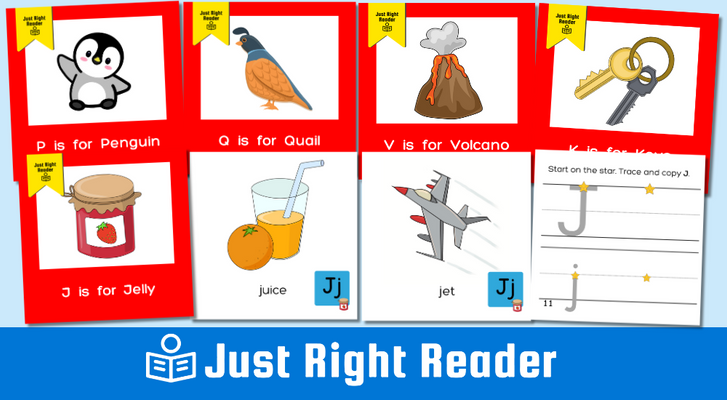
- Pre-emergent: letter recognition, letter sounds, articulation, and letter formation, with dry erase pages that connect reading and writing.
- Kindergarten through second grade: texts aligned to the letter and sound progression being taught, from short vowels through digraphs and diphthongs.
- High-interest chapter decodables: morphology, prefixes, suffixes, and multisyllabic words in fiction and nonfiction for grades 3 to 5.
- Success Series chapter books: K–2 foundational skills in a taller, chaptered format for older students and English learners, in beginner, intermediate, and advanced collections.
Class packs come with six copies of every title and at least five titles for every skill taught, so a group can stay on one skill long enough to own it.
How do you plan small group instruction that actually runs?
The most common question in the session was a management question: how do I keep all of this moving? The answer given was planning, in five specific moves.
Identify the learning needs
Use screeners, formative and summative assessments, observation, and behavior cues. Behavior is often the clearest signal that a student is stuck. Just Right Reader's diagnostic assessment gauges skills before teaching begins, so you know how to group.
You need: current data, not last spring's.Design flexible groups, not static ones
Students should not sit in the same group from September to June. Plan in advance for how and when you will move them, and let assessment data drive every regrouping.
You need: a regrouping checkpoint on the calendar.Build routines that are repeatable and efficient
Dr. Lindsey's guidance is that routines should be repeatable, efficient, and aligned with the Science of Reading. A different routine every day makes small groups harder, not fresher. Post the rotation, keep materials staged, and teach students how to get what they need without interrupting the teacher-led station.
You need: the same routine every day, visible to students.Scaffold the independent stations
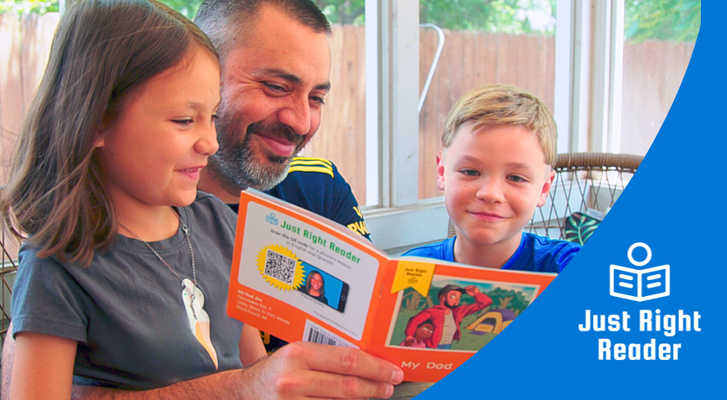
Independent time is instructional time. Give students sentence starters, manipulatives, and a decodable matched to their own skill. Every title carries a QR code linking to a one to two minute video phonics lesson, available in 14+ languages, so a student can refresh the skill on a classroom device before or while they read.
You need: a station plan per group, not per class.Plan acceleration for advanced readers
Advanced students are easy to lose in a small group model. Write the higher-level questions and enrichment tasks into the plan so their group time is as deliberate as everyone else's.
You need: enrichment written down before Monday.What does this look like when materials are built for it?
The teacher-led station and the independent stations can run on different decodables at the same time. That was described in the session as the game changer. While you teach one group a target skill, another group reads a different decodable matched to their own need, scanning the QR code for a refresher video lesson before they start.
Take-Everywhere Literacy Packs™ take the grouping work off your plate. You send your assessment data, we build the small groups from it, and each student receives a wrapped pack of six books with their name on it. The packing slip lists which students share the same skill focus, so the groups arrive already formed.
Average point gain on DIBELS Composite Scores for students using Take-Everywhere Literacy Packs™, compared with 61 points for peers.
From an LXD Research study of more than five months of use, showing statistically significant growth over students using competitor decodables. Just Right Reader carries ESSA Level 2 Moderate Evidence for reading and family engagement, and is used in 3,500+ school districts.

How do decodables support multilingual learners and older striving readers?
Through format and through language. Older students who missed foundational instruction still need K–2 skills. Success Series chapter books deliver those foundational skills in a taller, chaptered book that respects the reader's age.
The video phonics lessons are the second support. Every decodable's QR code opens a short lesson available in 14+ languages, so a multilingual student can get the phonics explanation in their home language while working independently, and a caregiver can use the same lesson at home. That is what we mean by literacy at school, at home, and everywhere.
Frequently asked questions
What is small group instruction?
Small group instruction is a targeted teaching approach in which a teacher works with three to six students at a time on a specific skill, while the rest of the class is engaged in meaningful independent or collaborative tasks. Its purpose is to differentiate instruction based on student need rather than teaching one lesson at one pace to everyone.
How many students should be in a reading small group?
Typically, three to six students. The group should be small enough that the teacher can hear every student read and give immediate, specific feedback.
Why use decodables in small group instruction?
Decodables let students apply the exact phonics skill they were just taught in a real reading experience. Just Right Reader decodables are 90% decodable, and 20% of every page aligns with that book's focus skill, so practice stays on target instead of sending students to guess at words they have no strategy for yet.
How do I decide which students belong in which group?
Group by skill need, using screeners, formative and summative assessments, observation, and behavior cues. Just Right Reader's diagnostic assessment gauges student knowledge before instruction, so groups start accurately, and summative data at the end of a cycle tells you how to regroup.
What do the other students do during small group time?
They work in collaborative or independent stations on meaningful, skill-aligned tasks: peer practice, games tied to the focus skill, or reading a decodable matched to their own need. Scaffolds such as sentence starters, manipulatives, and QR-linked video phonics lessons allow students to work without interrupting the teacher-led station.
Can decodables work for students above second grade?
Yes. High-interest chapter decodables carry morphology, prefixes, suffixes, and multisyllabic words for grades 3 to 5, and Success Series chapter books deliver K–2 foundational skills in an age-respecting chaptered format for older students who still need them.
Do decodables need to replace our core curriculum?
No. Just Right Reader decodables are supplemental and align to any phonics scope and sequence, including your existing core curriculum. They support Tiers 1, 2, and 3, including English learners, striving readers, and students with characteristics of dyslexia.

Terri King Hunt
Director of Impact and Learning, Just Right ReaderTerri is a former classroom teacher who now leads webinars and professional learning for Just Right Reader, working with educators on small group instruction and Science of Reading–aligned practice. This session closed her three-part back-to-school series.
Watch the full webinar
See the complete session, including the phonics progression walkthrough and the small group planning discussion with attendees.