
Editor’s Note: This article is adapted from our live webinar, “Maximizing Innovative Approaches to Literacy Funds to Accelerate Student Achievement & Engage Families,” featuring Terri King Hunt, Impact and Learning manager at Just Right Reader.
💡 Want to watch the full discussion? Access the on-demand webinar recording here.
School districts across the nation have an exciting opportunity to secure up to $750,000 per year in federal funding to transform reading achievement across their communities. The Innovative Approaches to Literacy (IAL) grant provides annual, recurring awards over five years to build comprehensive literacy ecosystems from birth through grade 12.
Administered through the Department of Labor on behalf of the U.S. Department of Education, this competitive funding stream is expected to award between 25 and 35 grants nationwide, with an average annual award size of approximately $500,000. Unlike one-time relief funds or narrow intervention grants, the IAL initiative allows districts to fund systemic, multi-year reading programs that unite schools, libraries, and families.
Navigating the IAL Grant Opportunity
- Funding spans birth through grade 12: The grant supports the full continuum of learning, from infancy literacy partnerships to high school reading initiatives.
- Two mandatory priorities apply: Every application must demonstrate coordination with school libraries and include a formal letter of endorsement from the governor or chief state school officer.
- Up to 15 bonus points are available: Applicants can earn up to 5 competitive preference points for rural locale status and up to 10 points for implementing evidence-based practices.
- Home-school connections drive measurable growth: Deploying Science of Reading–aligned materials directly to families accelerates DIBELS outcomes and builds lasting home reading habits.
- Early preparation is vital: With the June 9 submission deadline approaching, securing state endorsements and establishing library partnerships must begin immediately.
What is the Innovative Approaches to Literacy (IAL) grant?
The Innovative Approaches to Literacy grant is a federal program designed to expand access to literacy in high-need school districts. Awardees receive annual funding of up to $750,000 for five consecutive years, providing the sustained financial foundation needed to implement long-term literacy models rather than temporary fixes.
Because awards are distributed annually rather than over five years, selected districts gain substantial purchasing power each year. This multi-year structure enables curriculum leaders to implement evidence-based reading tools, expand early childhood outreach, and establish family engagement networks across all grade levels.
What core criteria does the grant support?
The IAL grant guidance focuses on three central pillars of community literacy access. Districts can design multi-faceted proposals that combine all three pillars to serve students at school, home, and everywhere in between.
1. Enhancing School Library Programs
Projects in this category focus on modernizing school library resources, expanding access to literacy, and turning libraries into community engagement hubs. Typical initiatives include hosting family literacy nights, organizing book distribution events, and utilizing libraries as central hubs for home reading packs.
2. Early Literacy Services Starting in Infancy
Targeting children from birth to age three, this priority encourages districts to build early literacy habits before formal schooling begins. Effective strategies often involve placing board books and language-building materials in pediatric offices, health clinics, early childhood centers, and maternity wards.
3. Regular Distribution of High-Quality Books
Serving as a comprehensive category for school-age students, this priority supports providing children with high-quality, engaging books on a consistent basis. It covers classroom instruction, high-impact tutoring, summer reading programs, intervention, and home literacy packs.
What are the mandatory application requirements?
To qualify for funding consideration, applicants must meet two priorities outlined in federal guidance.
The first requirement is explicit coordination with school libraries. Applicants must demonstrate how library staff and facilities actively participate in the proposed literacy initiative, such as serving as material distribution centers or co-hosting family engagement workshops.
The second requirement is a formal letter of endorsement from either the state governor or the chief state school officer. Because obtaining executive-level state signatures requires administrative processing time, districts should request these endorsement letters as early as possible.
How can districts earn competitive preference points?
Because federal grant reviews are highly competitive, securing preference points often makes the difference between an awarded proposal and an unassigned one. Districts can earn up to 15 additional points by leveraging rural status and evidence-based design.
Rural District Preference (Up to 5 Points)
Districts designated under specific National Center for Education Statistics (NCES) locale codes as rural automatically qualify for up to five additional competitive points during scoring.
Evidence-Based Practice Preference (Up to 10 Points)
Proposals receive up to 10 extra points by integrating interventions backed by strong, moderate, or promising evidence. This includes scaffolded instruction, high-impact tutoring, and structured home-learning supports.
How do Science of Reading–aligned resources meet grant criteria?
Aligning grant activities with rigorous research ensures both competitive scoring and real classroom impact. Just Right Reader offers Science of Reading-aligned resources spanning birth through grade 12, directly aligned with every IAL grant priority.
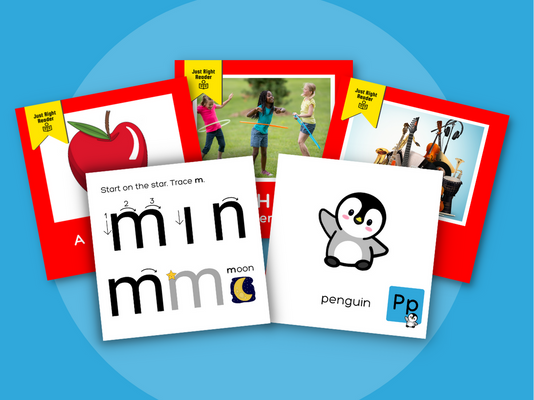
To support early childhood initiatives, Board Books for infants and toddlers provide hands-on literacy experiences alongside video tips for caregivers on topics like tummy time and dialogic reading. For pre-K and early elementary, Knowledge and Language Building Libraries build background knowledge and oral language skills through engaging fiction and nonfiction books.
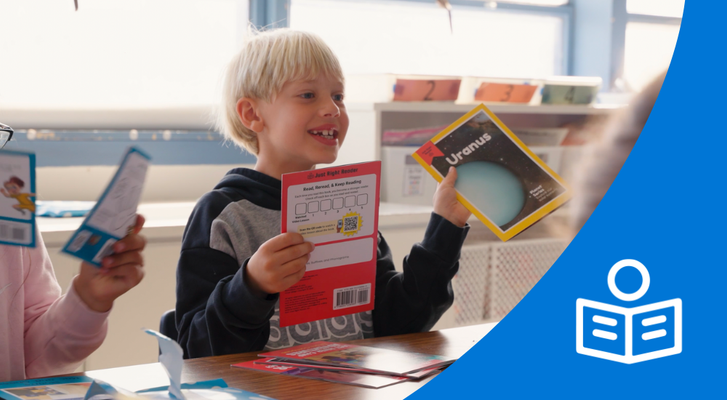
For elementary and middle school students, Take-Everywhere Literacy Packs™ include personalized decodables that are 90% decodable, ensuring students practice the exact phonics skills they need to become stronger, more confident readers. Each book features a QR code linking to a teacher-led video lesson available in 14+ languages, empowering multilingual families to support phonics practice at home.
“When families scan the QR code on a decodable book, they receive immediate instructional guidance in their home language while their child practices the target phonics skill in English. It bridges the gap between home and school effortlessly.”
– Terri King Hunt, LImpact & Learning Director
For older developing readers, the Success Series™ accelerates reading achievement with decodables that build foundational phonics skills through age-appropriate, relatable storylines.
Authentic Science of Reading Spanish decodables aligned with a native Spanish scope and sequence ensure that dual-language and biliteracy programs receive rigorous support without relying on simple direct translations.
What research validates home-school literacy partnerships?
Demonstrating evidence of effectiveness is essential for securing competitive preference points. Independent research confirms that combining decodable texts with direct family engagement leads to statistically significant gains in reading.
Just Right Reader holds an ESSA Level 2 – Moderate Evidence rating for both reading achievement and family engagement. In district implementations, 71% of caregivers regularly accessed the video phonics lessons, and 90% reported they were easy to use, demonstrating that accessible home tools create consistent reading routines.
How to build a winning IAL proposal in four steps
Executing a successful grant strategy requires coordinating partnerships, alignment, and administrative documentation before the submission deadline.
Secure State Leadership Endorsement
Initiate contact with your governor’s office or chief state school officer immediately to request the mandatory letter of endorsement. Utilizing pre-formatted endorsement templates can streamline state review.
Requirement: Mandatory for submission eligibility.Define School Library Integration
Meet with district library leadership to document collaborative strategies. Outline how school libraries will host family literacy nights, manage book distribution, or support summer reading initiatives.
Requirement: Mandatory for submission eligibility.Embed ESSA Level 2 Evidence-Based Tools
Select literacy resources that meet ESSA Level 2 standards to secure up to 10 competitive preference points. Integrate personalized resources like Take-Everywhere Literacy Packs™ and authentic Spanish decodables to serve Tiers 1, 2, and 3 learners.
Requirement: Unlocks maximum competitive preference points.Finalize and Submit Before June 9
Gather all application narrative sections, budget sheets, and endorsement attachments. Submit the completed application via Grants.gov prior to the June 9 deadline.
Requirement: Federal submission deadline.Frequently asked questions about the IAL grant
What is the application deadline for the Innovative Approaches to Literacy grant?
The official submission deadline for the IAL grant application is June 9. All materials, including required endorsement letters, must be submitted electronically through Grants.gov before the deadline.
Who is eligible to apply for IAL grant funding?
Local educational agencies (LEAs), including public school districts and charter school networks, are eligible to apply. Applicants must serve high percentages of low-income students and coordinate directly with school libraries.
Is a Letter of Intent (LOI) required prior to submitting the application?
No, submitting a Letter of Intent was strongly encouraged by federal administrators to gauge applicant volume, but it is not mandatory. Districts that did not submit an LOI remain fully eligible to apply before June 9.
How does the grant support early literacy before kindergarten entry?
The grant explicitly funds early literacy services from birth to age three. Districts can partner with pediatric clinics, early childhood centers, and community organizations to distribute board books, language-building sets, and caregiver guidance videos.
What evidence standards qualify for competitive preference points?
To earn up to 10 competitive preference points, proposed interventions must meet ESSA Level 1 (Strong), Level 2 (Moderate), or Level 3 (Promising) evidence standards. Just Right Reader holds an ESSA Level 2 – Moderate Evidence rating.
How do QR code lesson videos assist multilingual families?
Every Just Right Reader decodable book includes a QR code that families scan using a smartphone. The code opens a brief teacher-led video that models the book's target phonics skill in multiple languages, allowing non-English-speaking caregivers to confidently support English reading practice.
Terri King Hunt
Impact & Learning Director, Just Right ReaderTerri King Hunt works with school districts nationwide to implement Science of Reading–aligned literacy programs and family engagement initiatives. She specializes in helping educators connect classroom instruction with effective home practice to accelerate student reading achievement.
Watch the Full Webinar Recording
Learn more about structuring your IAL grant application and exploring birth-to-12 decodable solutions tailored for your district.
Watch the Webinar