
Two out of three fourth graders in the United States are not reading proficiently (National Assessment of Educational Progress, 2024). Despite years of investment in curriculum, assessments, intervention programs, and professional development, reading achievement remains a persistent challenge for most districts.
Strong classroom instruction is critical. But the hours students spend outside of school matter, too.
States are raising the bar
Over the past decade, a growing number of states have enacted early literacy policies that go well beyond identifying struggling readers.
Many now require districts to:
-
Notify families when students are reading below grade level
-
Provide specific strategies and resources families can use at home
-
Document that family support plans are in place
The expectation isn't just that schools communicate with families, it's that they help families take action.
That's a significant shift. A notification letter may check a compliance box, but it doesn't necessarily help a parent support reading at home. And that's where many traditional family engagement materials fall short. Generic tip sheets, one-page handouts, and standard book packs often provide information without providing the guidance, structure, or support families need to actually help their child.
Where most districts fall short
One of the most common challenges districts face is treating literacy compliance as a communication task rather than an instructional opportunity. A letter goes home. A tip sheet gets tucked into a folder. A book pack gets sent without clear guidance on how to use it.
Research consistently shows that family involvement is one of the strongest predictors of student achievement in the early grades. Families want to help. But wanting to help and knowing how to help are two different things. When materials aren't personalized to a child's actual literacy needs or explained in a way families are comfortable with, good intentions don't translate into reading practice.
The districts making real progress on this aren't just checking the compliance box. They're asking a better question: what does this family need to do differently tomorrow night, and how can we make that as easy as possible?

What effective family literacy support actually looks like
The most effective read-at-home plans have a few things in common.
1. Materials are matched to the student's decoding needs
Effective support starts with meeting students where they are. A second grader reading well below grade level needs different books and activities than a classmate who is only slightly below grade level. When every family receives the same packet, it rarely meets any student exactly where they are.
2. Families receive clear, actionable guidance
Telling parents to "read together" is well-intentioned, but it's rarely enough. Effective programs provide simple, specific instructions that fit into real life, whether that's fifteen minutes after dinner, a few minutes before bed, or time during a weekend routine. Families should know exactly what to do, how long to do it, and why it matters.
3. Home practice reinforces classroom instruction
The most successful programs create a direct connection between home and school. When families reinforce the same phonics patterns, decoding skills, or reading strategies being taught in the classroom, students get the repetition needed to build mastery.
4. Support is accessible to every family
Even the best materials have limited impact if families can't easily use them. Effective programs provide resources in families' home languages, use straightforward instructions, and remove barriers that make participation difficult. The goal is to make reading support feel achievable, not overwhelming.
5. The focus is on action, not just communication
Sending a letter home may satisfy a requirement, but it doesn't automatically help a child become a stronger reader. The most effective districts focus on what families can do next. Every communication, resource, and activity should answer one question: What can this family do tonight to support their child's reading development?
How Just Right Reader helps districts meet their Read-at-Home Plan requirements
States across the country require districts to provide families with specific reading strategies and materials when students fall below grade-level benchmarks. Most districts respond with generic tip sheets and one-page letters. Just Right Reader’s Science of Reading Take-Everywhere Literacy Packs™ are personalized, curriculum-aligned, and built exactly for this moment, turning a compliance requirement into an effective instructional asset that actually moves students forward.
They're backed by ESSA Level II - Moderate Evidence research for Reading and Family Engagement Programs, and:
• matched to each student's reading data so practice is personalized and targeted
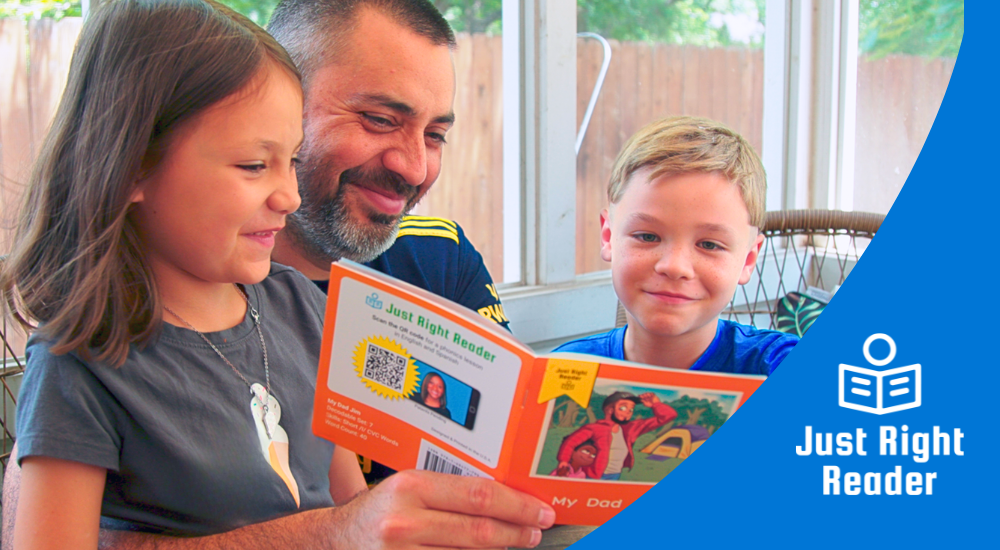
• supported by teacher-led video lessons in 14+ languages, resources, and fun activities so every family knows exactly what to do
• aligned to your scope and sequence, so practice at home reinforces what's happening in the classroom

Districts using Take-Everywhere Literacy Packs™ have seen 8X DIBELS growth in just six weeks.
That's not compliance for compliance's sake. That's compliance that actually moves students forward.

If your district is ready to move beyond the generic tip sheets and one-size-fits-all resources, we've got you covered. Click here to learn how Just Right Reader supports read-at-home plans across the country.